
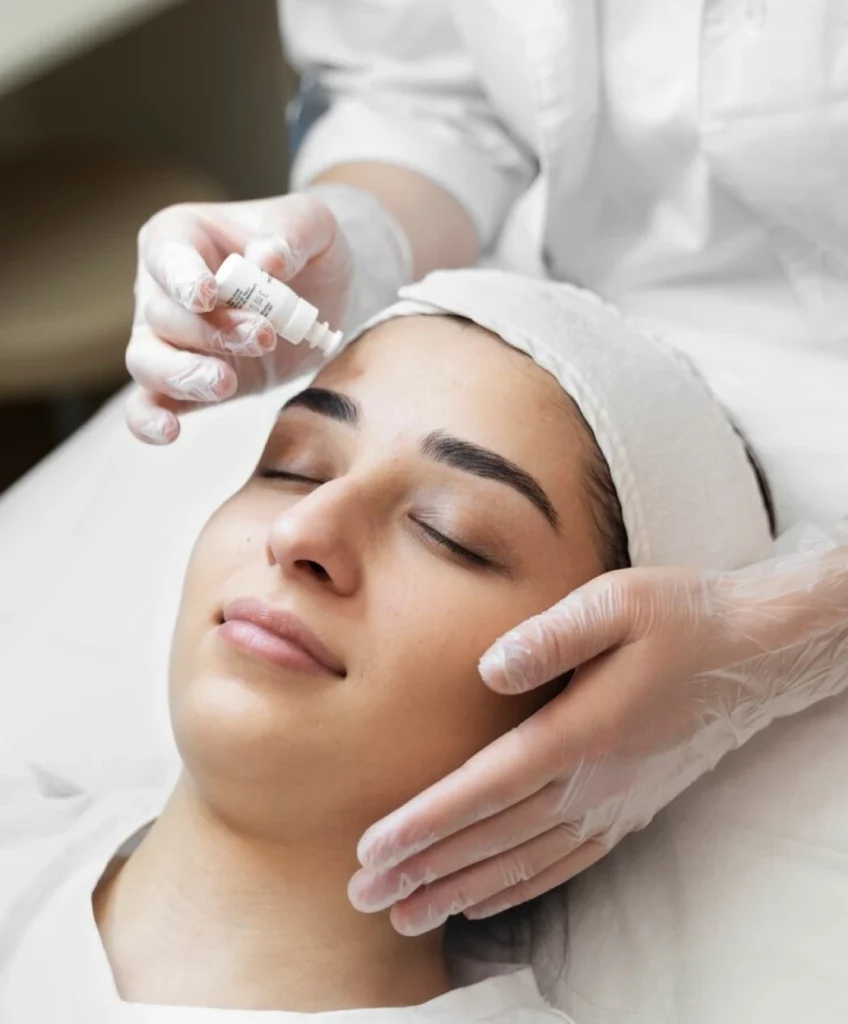
Acne
Acne is a skin condition affecting many people at some point in their lives. Acne is caused by the pores and follicles becoming blocked. This can happen due to an overproduction of Sebum oil, hormone imbalance, growth of Acne bacteria and a fast cellular turnover which causes a thickening of the skin. All of these things cause inflammation as well as transepidermal water loss leading to acne. Acne can present itself on the face and body and can sometimes be painful to touch.
Acne forms when pores become clogged with sebum, dead skin cells and bacteria. If the build occurs below the skin surface, this creates a “whitehead.” If the build-up reaches the surface, a “blackhead” forms (the black is not actually dirt; it’s bacteria which darkens when exposed to oxygen).
Blocked pores can burst and cause the spread of bacteria causing more breakouts and blemishes. For this reason, you are encouraged not to attempt to pop or pick at any pimples and instead control the breakouts by following an appropriate skincare routine tailored specifically to acne-prone skin. Here at the clinic, we can offer some cost-effective options and expert advice on what products to use and to avoid.
Many people suffer in silence from acne into their 30s and 40s; in fact, 20% of women and men continue to have acne beyond their teens but not all acne is the same; it is important that the treatment your skin receives is appropriate for your skin type and sub-type of acne. Your skin consultation will ensure you receive a tailored program which is individual to your exact needs and it is important to address the root cause of Acne to get visibly lasting results which boost the skin’s health and reduce the psychological burden often caused by acne.
If you are suffering from skin problems such as Acne, please do come and see us for a no-obligation skin consultation with our doctor or one of our aesthetic therapists. We only offer treatments which have clear and strong evidence of their effectiveness like Chemical peels, Laser therapy, Microneedling, Hydrafacial, Mesotherapy. Acne can never be fully cured but it can be controlled by changing select things appropriate skincare products and addressing build up of bacteria on the skin.
Acne Scarring
Acne scars are textural changes and indentations in the skin that’s left behind after you have had moderate to severe acne. These scars can be difficult to hide, even with high coverage or camouflage make up. The scars do improve slowly over time, but usually more severe ice pick scarring requires clinical intervention to improve the cosmetic appearance. No scars are easy to remove but we do offer a number of proven treatment methods that can see dramatic improvements. Often using treatments in combination with homecare products can give exceptional results and with a little time and patience, skin health and appearance can be improved.
There are lots of different types of scarring and the most effective treatment is often micro-needling. During micro-needling treatments, the needles cause tiny punctures in the skin and when the skin is injured, a serious of reactions take place in order to maximise and repair tissue damage. This encourages collagen and elastin production, resulting in firmer and plumper skin.
Types of Acne Scarring:
PIH (post-inflammatory hyper-pigmentation)
Pink or purple flat marks that are left behind, due to re-occurring spots in the same area, these marks may improve on their own over time.
ICE-PICK SCARS
These are deep, narrow, pitted scars that are indented in the skin.
ROLLING SCARS
Broad depressions with a sloping edge.
BOXCAR SCARS
Broad depressions with sharply defined boxy edges.
ATROPHIC SCARS
Flat, thin scars or depressed scars (anetoderma).
HYPERTROPHIC OR KELOID SCARS
Thick lumpy raised scars. Traumatic scars are areas of fibrous tissue that replace normal skin after an injury.
Treatments Available
Open Enlarged Pores
Multiple factors are responsible for enlarged pores.
- Low levels of collagen production, usually caused by ageing/sun damage
- Excess sebum production
- Thick hair follicles which cause reduced elasticity around pores
Open pores on your cheeks, nose, and forehead can appear larger as you age, or when your pores are clogged. Keeping skin clean, and avoiding the sun, are two of the best ways you can reduce the appearance of open pores. While nothing actually opens or closes pores, treatments are available that can make them look smaller, giving you the appearance of healthier and more vibrant skin. A large pore is an indication of an increase in the size of the oil glands and oil production, and people with oily skin tend to have some form of acne. The size of oil glands is usually controlled by hormones and an overproduction of oil which will lead to acne.
For many people, both acne and large pores tend to be inherited and if acne runs in your family, you may experience more severe acne than people without this family history.
Having large pores doesn’t automatically mean you will develop acne, but because the two are connected, controlling one can help the other.
Therefore, a consistent skincare regime tailored to your skin needs, will help to balance the oil production and reduce pore size, alongside professional treatments to enhance the results.